

15 Nov The Essential Guide to Rehoming a Birdline Bird
It all begins with the Bird
When entrusting their cherished pet to Birdline for rehoming, individuals do so with the confidence that we will spare no effort in safeguarding, nurturing, and securing the ideal new home for them. Many former owners stay connected, seeking updates to ensure the safety and happiness of their birds. We take this responsibility seriously, conducting a comprehensive rehoming process, including a thorough phone interview and an in-person home check. While the thoroughness of our process may be frustrating for some, our foremost priority is to secure the perfect home for the bird.
Frequently, people enquire about why we prefer face-to-face home checks over video inspections. We believe that a video cannot substitute for visiting the home, where a visual examination can reveal nuanced details and potential hazards overlooked by the applicant. The ability to detect subtle scents, like a faint fragrance from forgotten air fresheners, candles, cigarettes, or vapes, is crucial, as these can pose lethal risks to birds.
Additionally, we genuinely appreciate getting to know potential foster homes and establishing rapport with them. Fostering a Birdline Bird is a unique experience, distinct from other forms of adoption or pet acquisition. By fostering with us, you become part of a lifelong support community.
Should I Apply for a Bird?
Fostering a parrot is potentially a lifelong commitment for both the bird and you. This decision should not be made impulsively, and we strongly encourage you not to apply on a whim. Take your time, conduct thorough research, and apply only when you are absolutely committed!
Consider whether the timing is appropriate to introduce a bird into your life. Contemplate upcoming life events such as impending births, family obligations, house moves, job changes, the addition of other pets, and how these factors may impact a bird. Is it fair to introduce a bird now, or would it be better to wait for a more settled time in your life?
Birds can be noisy, destructive, and potentially lead to health issues. Consider whether you or your family members have:
- Allergies: Bird feathers, dander, and droppings may trigger allergies, resulting in breathing issues, sneezing, or skin reactions.
- Respiratory Issues: Birds produce dust that can aggravate respiratory conditions such as asthma or COPD.
- Compromised Immunity: Some diseases can be transmitted from birds to humans, causing flu-like symptoms or worse.
- Noise Sensitivities: Parrots are known for their loud and/or high-pitched vocalizations, which can exacerbate tinnitus and other noise sensitivity issues.
- Neurodevelopment Disorders: Natural parrot behaviors such as screaming, banging toys, or unpredictability, may pose additional challenges for individuals with autism or similar conditions.
- Stress or Anxiety: Prolonged exposure to loud noises and other disruptive parrot behaviors can lead to stress and anxiety.
If the answer to any of these questions is yes, ensure that it is the right option for both you, your family, and the bird.
The Rehoming Process
The Rehoming Process starts with the bird and is designed to match the bird with the perfect home for them. An extensive evaluation is submitted to the Rehoming Team by the Safehouse who is currently assessing and caring for the bird. This comprehensive assessment encompasses vital details including a medical history where applicable, preferences and dislikes. These insights serve as the foundation for crafting the bird profile that appears on the Meet the Flock page.
Recognising the need for brevity, the profile cannot encompass every minute detail. Instead, it offers a concise overview. However, rest assured that during the Rehoming Process, we transparently disclose all pertinent information. Our commitment is to ensure that both the bird and potential Fosterers have access to the information necessary to facilitate a seamless and well-informed rehoming experience.
Rehoming Stages
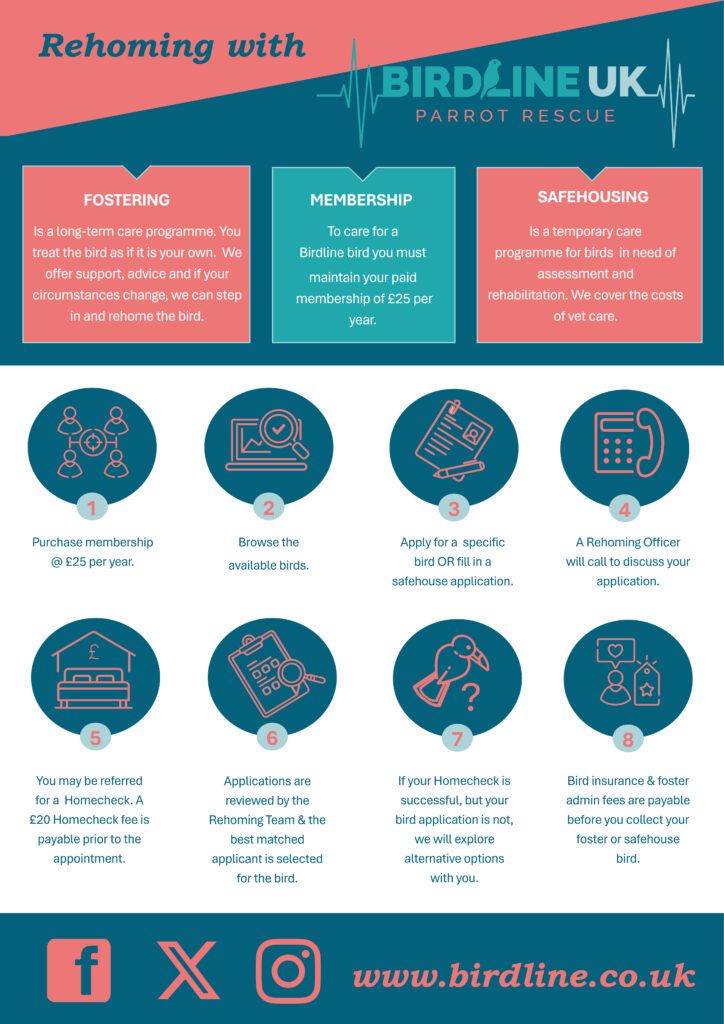
Application Phase: After a bird joins the Rehoming List, we allow a period of a few weeks so that members have the opportunity to apply and ensuring a substantial pool of applications for an optimal match with the perfect home for the Parrot.
Allocation to Rehoming Officer: The bird is assigned to a Rehoming Officer, responsible for reaching out to all applicants in a systematic manner. This step is time-consuming, considering the potential for 10 or more applicants per bird.
Comprehensive Phone Interview: The Rehoming Officer conducts an extensive phone interview with each applicant, delving into the home environment, and bird-keeping experience.
Access to the Bird’s Evaluation: Armed with access to the bird’s full evaluation, the Rehoming Officer discusses pertinent details during the interview. This dialogue may reveal specific factors, such as aversions to a specific hair length or colour, beards, spectacles, or specific pet species, that could influence the suitability of your home. But don’t be disheartened, just because a particular bird isn’t suitable, doesn’t mean another bird won’t be the perfect match.
Recommendations and Research: The Rehoming Officer might suggest further research before progressing. Don’t forget that members have access to a comprehensive information pack, which provides all the basic information required to home a bird. Once satisified, the rehoming officer, will recommend you for a Home or Species Check.
Coordination with Area Coordinator/Manager: After a successful phone interview, your details are forwarded to your Area Coordinator/Manager. They will be in contact to organise an in-person home or species check. All family members involved in caring for the bird should ideally be present at the Homecheck Appointment.
Alternate Matchmaking: If you pass your Homecheck but are not suitable for the bird you have applied for, we will suggest alternatives that are more suited to your environment.
Timely Application Processing: While the entire process demands time and dedication, we strive to handle your application as promptly as possible.
Membership Maintenance: Remember, maintaining your Birdline membership throughout your tenure with a Birdline Bird is crucial.
Support: The Birdline representatives, who will support and meet you during your rehoming journey, are all volunteers managing this responsibility alongside their jobs, family commitments, and care for their own birds. Your politeness and understanding during this collaborative effort are deeply appreciated.
What we look for in a Homecheck
The main purpose of a home check is to check your circumstances are suitable for a bird, and to ensure certain health and safety aspects are either in place, or you are committed to establishing them. Your home doesn’t have to be spotless or super tidy, but it does have to be hygienic and not have so much clutter that it could injure the bird. We will ask to see your ID, have a friendly chat and ask you to show us around your home. We give applicants the opportunity to rectify any issues, and improve their knowledge before making a final decision.
Points we usually address in home checks and follow ups are:
- Safe window and door openings.
- Exposed wiring, which should be adequately covered or concealed.
- Non-stick pans or electrical items with Teflon (air fryers, irons, waffle makers).
- Lethal detergents such as bleach, spray polish etc.
- Toxic plants, cigarette smoke, e-cigarettes, drugs, air fresheners, essential oils, fragrances, perfumes, aerosols, solvents that may be present.
- Heating systems which emit fumes e.g., paraffin, log burners, gas.
- Level of knowledge, research and willingness to learn and accept advice. You may find our fact sheets helpful.
- Willingness to accept advice on bird nutrition, health, safety and care.
- Ability to use an avian certified vet, e.g., because it is too far away, no transport or friend/family to help with transport etc
- Cleanliness, condition and suitability of existing bird equipment.
- Willingness to cope with destructive behaviour from the bird.
- Suitability of living arrangements to cope with bird noise, e.g., a loud cockatoo in a flat.
- A separate space to ensure dogs, cats and other predator animals are not able to be in contact with birds when they are out of their cages.
How to Apply
Find out more information including costs on the How to Apply for a Bird page.